Ensembles and soloists explained
Each kind of ensemble has its own sound and its own way of making music, and knowing the differences makes a concert more rewarding.
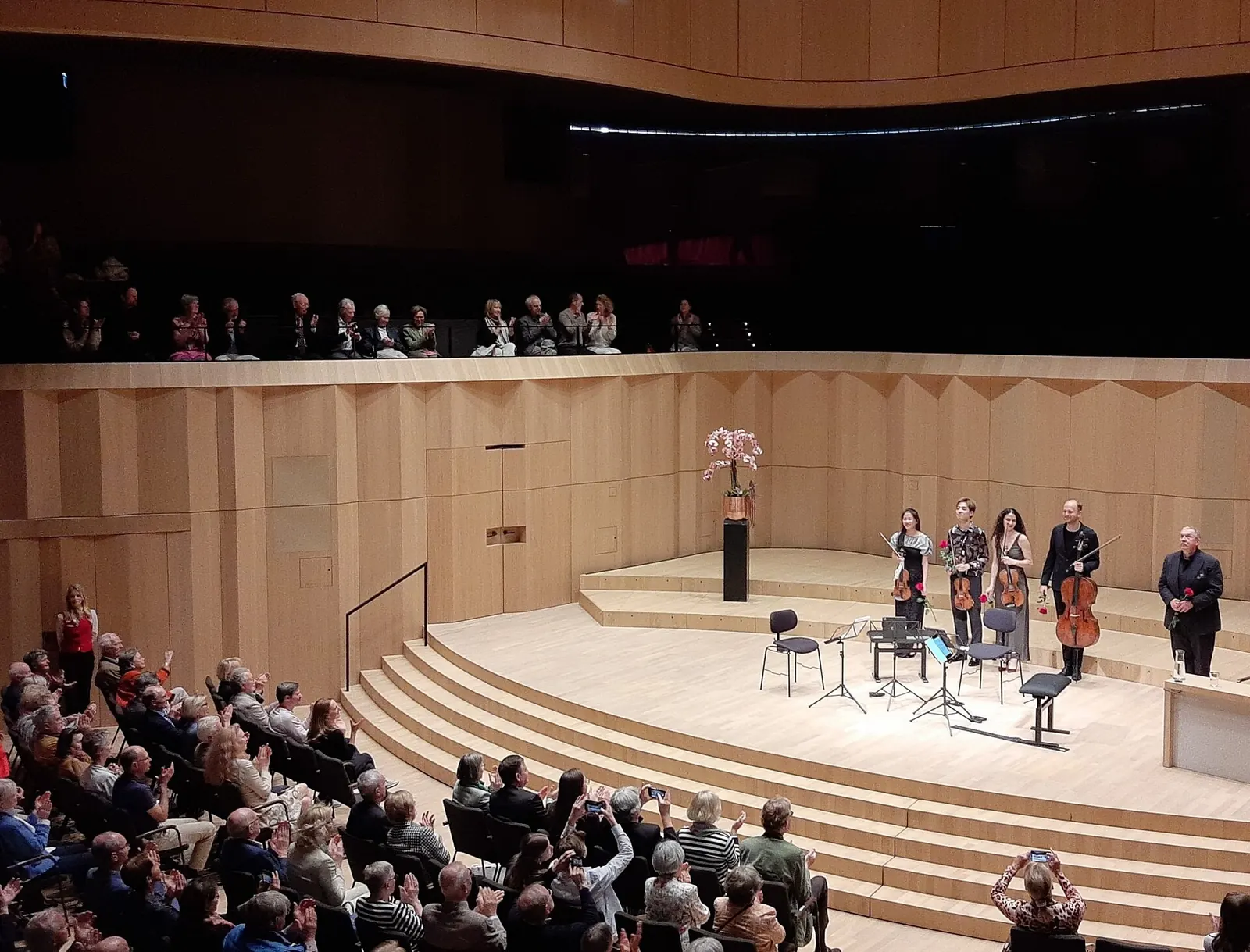
If you are choosing music for an evening, or simply curious about what you are hearing, it helps to know how the main groupings differ. Size changes everything: the balance, the volume, the amount of detail and the way players communicate.
The soloist
A soloist carries the whole performance alone, or stands in front of an accompanist or orchestra. A pianist, violinist, cellist or singer can shape time and tone with great freedom.
What to listen for: the way phrases breathe, how quiet passages are held, and how the player's personality comes through in small choices.
The string quartet
Two violins, a viola and a cello. It is often described as a conversation between four equals, and the repertoire from Haydn onwards is among the richest in classical music.
What to listen for:
- Themes passed between players, especially from the first violin to the cello.
- How closely the four blend their tuning in slow, quiet chords.
- The inner voices of viola and second violin, which often hold the harmony together.
The piano trio
Piano, violin and cello. The piano brings weight and a wide range, while the two strings sing above and below. Trios by Beethoven, Schubert and Brahms are staples.
What to listen for: the balance between a loud instrument that cannot sustain notes and two that can, and how the strings answer each other over the keyboard.
The chamber orchestra
Usually somewhere between about fifteen and thirty players, with no conductor in some cases. The sound is lighter and more transparent than a full orchestra, which suits Baroque music, Mozart and much twentieth-century writing.
What to listen for: individual lines that stay clear even in busy passages, and the sense of a large group moving as one small team.
The symphony orchestra
Strings, woodwind, brass and percussion, often eighty players or more. This is the group for big symphonies, concertos and opera in the pit. A conductor coordinates the sections and shapes the overall arc.
What to listen for:
- Contrasts between the sections: warm strings, then a woodwind solo, then brass climaxes.
- Changes in colour as instruments combine.
- How the conductor controls pace and the build towards a loud moment.
Choosing the right one
A quartet or trio suits a room where people sit close and want detail. A chamber orchestra works well in a church or mid-sized hall. A full orchestra needs space and rewards a sense of occasion. A soloist can fit almost anywhere.
To see how groups can be matched to an occasion, look at what an engagement involves, browse audio and video, or send a question through the enquiry form. You can also read more about us and see the events diary.